Clover High
The Sky Is EverywhereClover High is a school setting where private grief becomes visible in public and musical ambition is tested in practice. Lennie Walker returns after a month away following Bailey’s death to a building whose corridors seem to register her loss before she can speak of it. The same school also brings her into contact with Joe Fontaine, places her beside Rachel Brazile in the band, and eventually becomes the scene where Lennie declares that she wants her clarinet solos and first chair. Its importance lies in this double function: Clover High exposes Lennie to other people’s attention while giving her a route back into music.
Setting and Return
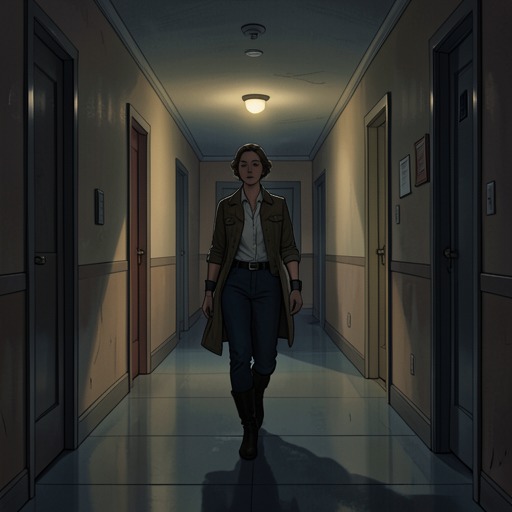
On Lennie’s first day back, the hallway parts around her and conversations fall quiet. The other students look at her with uneasy sympathy, and she feels as though grief is something visible that she carries into the building. The return is not simply a resumption of school routine: Clover High makes her bereavement public, even when no one directly asks her to explain it. That atmosphere is complicated by the school’s excitement about Joe Fontaine, who arrived during Lennie’s month-long absence. Students trade news about the newcomer, and Lennie encounters him in the band seat she has occupied for the past year. The coincidence puts her grief and the school’s curiosity into the same moment. Joe’s lively manner and immediate apology contrast with the subdued sympathy surrounding her, giving this first meeting an emotional charge without displacing the loss that shapes her return.
The Band Room and Its Hierarchies
The music room is one of Clover High’s most consequential spaces. There Lennie sees Joe in her familiar seat and meets Rachel, who holds first chair clarinet, a position Lennie believes she ought to occupy. Rachel’s casual confidence in the room—including her touch on Joe’s back and her remarks about his musical background—sharpens an already tense arrangement. Sarah, sitting beside Lennie, bristles at Rachel because of the first-chair decision, though Sarah does not know the circumstances behind Lennie’s earlier withdrawal from competition. The school band’s hierarchy is therefore not only a matter of seating. It reflects Lennie’s past inhibition and the gap between her ability and what she has allowed herself to pursue. The narrative later makes that gap explicit when Lennie challenges Rachel and says she wants the solos. She also announces that she is starting up again with Marguerite and intends to try for All-State. Her decision redirects the rivalry: she says the challenge is about her and her clarinet, not about Joe or Rachel. Clover High’s band room becomes the place where she names an ambition as her own.
Music Beyond the Classroom
The school’s musical life is not confined to rehearsals indoors. In a memory of freshman year, Lennie recalls that she and Bailey had both made honor band. Mr. James, frustrated with the students’ constrained playing, led them out of the room and down a path into the forest beside a rushing river. He asked them to listen and make music, then conducted the river, wind, and birds. The students gradually joined with their instruments, including clarinets, flutes, and oboes, until the natural sounds and playing blended into a disorderly ensemble. That episode gives the school’s music instruction a distinctive counterpoint to its formal seating and auditions. Mr. James’s lesson asks students to listen beyond the instrument and to make sound without waiting for perfect control. Lennie remembers being among the first to play. The recollection stands against her later silence and reluctance, showing that her musical capacity and willingness to take part existed before grief and self-doubt narrowed them. The forest outing begins at school but briefly carries its students outside the classroom’s ordinary boundaries.
Rehearsals, Setbacks, and Renewed Agency
Clover High’s rehearsals also hold competing emotional pressures. While preparing pieces for the River Festival, Lennie finds herself absorbed in playing with Joe, imagining their musical exchange as spontaneous and shared. Then thoughts of Toby and their recent encounter interrupt her concentration. She pulls her attention back to the arrangement and follows it without deviation. The episode locates music at once as a source of connection and as an activity vulnerable to grief and divided loyalties. Another rehearsal tests Lennie’s attempt to regain confidence. Encouraged by Sarah, she arrives dressed up for band practice as part of a plan to attract Joe’s attention. Before the class begins, the announcement changes the expected performance: the band has lost its only trumpet player, and Joe will perform with his brothers instead. Rachel then taunts Lennie about Joe being beyond her reach. The setback exposes how fragile Lennie’s plan is when it depends on someone else’s choice; it does not, however, settle the larger question of her musical future. That question receives a firmer answer when Lennie approaches Rachel in the music room and challenges her for first chair. Rachel initially continues adjusting her reed and ligature rather than responding. When Lennie states that she wants the solos, is restarting with Marguerite, and will try for All-State, Rachel gives her full attention and proposes splitting the solos. The exchange turns Clover High’s band hierarchy from a source of silent resentment into a negotiation Lennie has actively entered.
Narrative Significance
Clover High links the social experience of loss with the possibility of renewed participation. Its hallway makes Lennie feel exposed, its band seating gives rivalry a physical form, and its rehearsals let musical feeling surface even when her private life disrupts her concentration. The remembered freshman-year outing further complicates the school’s role: music is not only disciplined competition but also listening, experimentation, and collective sound. The school does not erase Lennie’s grief, nor does a challenge for first chair resolve every conflict around her. Instead, its successive scenes mark a change in how she acts within the life she had temporarily left. She returns as the object of sympathetic attention, becomes entangled in the band’s social and musical tensions, and finally speaks directly for her own goals. At Clover High, the movement back toward music is measured not by an immediate victory but by Lennie’s willingness to claim a place and ask for the work she wants.